International Conference on Advanced Nanomaterials and Materials Science for Sustainable Energy, Electronics, and Future Technologies
Innovating Smart Materials and Nanotechnologies for a Sustainable and Technologically Advanced Future
The International Conference on Advanced Nanomaterials and Materials Science brings together researchers, scientists, academicians, and industry professionals to explore groundbreaking innovations in nanotechnology and advanced materials. The event highlights sustainable solutions, emerging technologies, and interdisciplinary research shaping the future of energy, electronics, healthcare, and environmental applications.
Conference Highlights
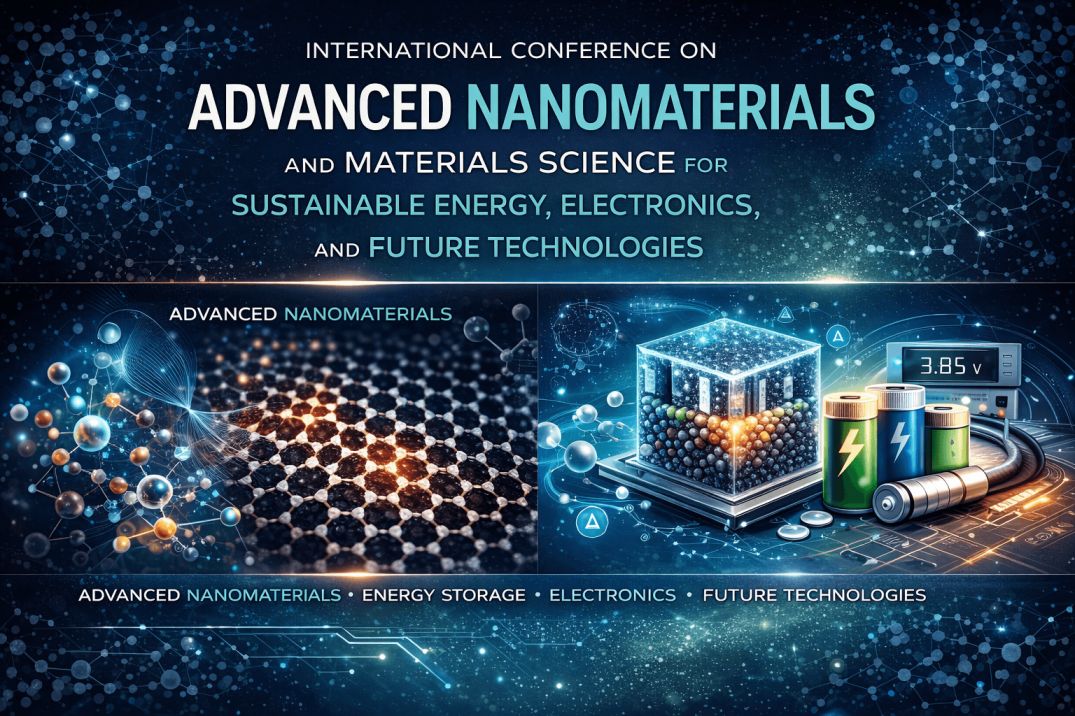
International Conference on Advanced Nanomaterials and Materials Science for Sustainable Energy, Electronics, and Future Technologies
Innovating Smart Materials and Nanotechnologies for a Sustainable and Technologically Advanced Future
Jul 22, 2026 12:00
Jul 22, 2026 18:00
Jul 01, 2026 23:59
Jun 15, 2026 23:59
Digital
Online
Conference Chairs, Editors & Special Roles






Approved Speakers & Presenters
Aqsa Malik

Sidra Habib

Uzair Naeem
Zeshan Munir
Ammara Aslam

Abdul Rehman

Dr.Ashfaq Ahmad
Sami Ullah Khan
Ifra Shaheen

Muhammad Awais

Muhammad Danish Ali
Aqsa Malik
Sidra Habib
Uzair Naeem
Zeshan Munir
Ammara Aslam
Abdul Rehman
Dr.Ashfaq Ahmad
Sami Ullah Khan
Ifra Shaheen
Muhammad Awais
Muhammad Danish Ali
Conference Description
The International Conference on Advanced Nanomaterials and Materials Science (ICANMS) serves as a distinguished global forum dedicated to the exploration, advancement, and dissemination of groundbreaking research in nanotechnology and materials engineering. Designed to foster interdisciplinary collaboration and scientific excellence, this conference provides an exceptional platform for scholars, researchers, industry leaders, innovators, and policymakers to exchange knowledge and explore transformative solutions that address contemporary technological and societal challenges.
As materials science continues to revolutionize industries ranging from energy and healthcare to electronics and environmental sustainability, this conference aims to bridge the gap between fundamental scientific discoveries and practical, real-world applications. By encouraging dialogue between academia and industry, ICANMS promotes innovation, accelerates technological progress, and supports the development of next-generation materials that drive global advancement.
The conference will showcase cutting-edge developments in nanomaterials, smart materials, and advanced functional systems designed to meet the demands of modern technology and sustainable development. Particular emphasis will be placed on environmentally responsible and energy-efficient innovations that contribute to clean energy production, high-performance electronics, environmental protection, and biomedical advancements. Participants will have the opportunity to present pioneering research, exchange ideas, engage in thought-provoking discussions, and establish meaningful collaborations that shape the future of science and industry.
Key discussions will highlight emerging trends such as artificial intelligence-driven material discovery, quantum materials, additive manufacturing, and advanced characterization techniques. These innovations are poised to redefine manufacturing processes, enhance material performance, and enable unprecedented technological breakthroughs. Through knowledge sharing and collaborative engagement, ICANMS seeks to empower researchers and engineers to develop solutions that address global challenges while supporting sustainable growth.
The conference program will feature keynote and plenary lectures from internationally renowned experts, technical and parallel sessions, poster presentations, workshops, panel discussions, industry exhibitions, and networking opportunities. Special sessions will be dedicated to early-career researchers and students, providing mentorship, professional development, and exposure to global research trends. By cultivating an environment of innovation and intellectual exchange, the conference aims to inspire the next generation of scientists and engineers.
Ultimately, ICANMS strives to advance scientific discovery, promote interdisciplinary collaboration, and encourage the responsible development of advanced materials that contribute to economic growth, environmental sustainability, and technological progress. By bringing together diverse perspectives from academia, research institutions, and industry, the conference will play a pivotal role in shaping the future of nanotechnology and materials science.
Suggested Themes and Subcategories
1. Nanomaterials and Nanotechnology
- Synthesis and fabrication of nanostructured materials
- Nanoparticles, nanofibers, nanowires, nanotubes, and quantum dots
- Nanocomposites and hybrid nanostructures
- Surface engineering and nanoscale modification
- Two-dimensional materials and heterostructures
- Nanoelectronics and nanophotonics
- Characterization of nanoscale materials
- Industrial and commercial applications of nanotechnology
2. Energy Storage and Conversion Materials
- Batteries: lithium-ion, sodium-ion, solid-state, and metal–air
- Supercapacitors and hybrid energy storage systems
- Hydrogen production, storage, and fuel cells
- Solar cells and photovoltaic materials
- Thermoelectric and piezoelectric materials
- Electrocatalysts for energy applications
- Materials for renewable and sustainable energy systems
- Advanced electrode and electrolyte materials
3. Advanced Functional and Smart Materials
- Stimuli-responsive and adaptive materials
- Self-healing and shape-memory materials
- Electrochromic, magnetostrictive, and ferroelectric materials
- Multiferroic and metamaterials
- Sensors and actuator materials
- Responsive polymers and intelligent coatings
- Flexible and wearable electronic materials
- Intelligent structural materials
4. Graphene and Carbon-Based Materials
- Graphene, graphene oxide, and reduced graphene oxide
- Carbon nanotubes, fullerenes, and graphyne
- Carbon quantum dots and nanodiamonds
- Carbon-based nanocomposites
- Applications in electronics, sensing, and energy storage
- Conductive inks and printed electronics
- Carbon materials for catalysis and environmental remediation
- Sustainable carbon nanostructures
5. Biomaterials and Nanomedicine
- Biocompatible and biodegradable materials
- Nanomaterials for drug delivery and diagnostics
- Tissue engineering and regenerative medicine
- Bio-inspired and biofunctional materials
- Medical implants and prosthetics
- Nanobiosensors and biomedical imaging
- Antimicrobial and antibacterial materials
- Materials for personalized and precision medicine
6. Semiconductor and Electronic Materials
- Advanced semiconductor materials and devices
- Thin films and microelectronic materials
- Optoelectronic and photonic materials
- Wide bandgap semiconductors
- Flexible and wearable electronics
- Spintronics and nanoelectronics
- Integrated circuits and microfabrication technologies
- Materials for next-generation communication systems
7. Environmental and Green Nanotechnology
- Sustainable and eco-friendly nanomaterials
- Materials for water purification and desalination
- Carbon capture, storage, and utilization
- Photocatalysis and environmental remediation
- Air pollution control and monitoring
- Waste management and recycling technologies
- Green synthesis of nanomaterials
- Circular economy and life cycle assessment
8. Computational and AI-Driven Materials Design
- Artificial intelligence and machine learning in materials science
- Computational modeling and simulation
- Density functional theory and molecular dynamics
- Materials informatics and big data analytics
- High-throughput materials discovery
- Digital twins and predictive materials engineering
- Quantum computing in materials research
- Data-driven optimization of material properties
9. Polymer and Composite Materials
- Advanced polymer synthesis and processing
- Nanocomposites and reinforced materials
- Conductive and functional polymers
- Smart and responsive polymer systems
- Lightweight structural composites
- Biopolymers and sustainable plastics
- Coatings, adhesives, and elastomers
- Industrial and aerospace applications
10. Sustainable Materials for Future Technologies
- Materials for net-zero and carbon-neutral technologies
- Circular and recyclable materials
- Materials for smart cities and infrastructure
- Additive manufacturing and 3D printing materials
- Materials for space and aerospace applications
- Advanced coatings for durability and corrosion resistance
- Sustainable electronics and green manufacturing
- Future materials for Industry 4.0 and beyond